
We talk about access to care all the time
Recently, federal regulators sought public comment on what qualifies as an Essential Health Benefit under the Affordable Care Act. Essential is an interesting word. Ask someone whose hearing has changed, whose vision has deteriorated, or whose dental problems affect what they can comfortably eat whether those things matter to their health. Most people would answer without much hesitation.
Yet for decades, many of those services have occupied a strange space in healthcare. Important, certainly. Clinically relevant, often. Connected to health outcomes, increasingly obvious. But still somehow separate from what many health plans and public programs traditionally consider “medical care.” Original Medicare, for example, generally excludes most routine dental care, routine eye exams for prescription glasses, hearing aids, and exams for fitting them. So, the benefits your taxes pay for will cover life support should you fall into a coma. But they don’t cover most sense-related capabilities that allow you to stay healthy and independent. Remember when we treated mental health the same way?
Healthcare leaders spend enormous time talking about access to care. We debate physician shortages, provider networks, insurance coverage, transportation, affordability, prior authorization, and all the other barriers that determine whether people can get the care they need. But benefit design is one of the most powerful forces shaping access to care, and it is hiding in plain sight.
Benefit design sounds like the sort of thing the average person doesn’t care about — until it’s a roadblock. But every decision about what a health plan covers is also a statement about which health problems deserve attention, which interventions matter, and which risks are worth addressing before they become something larger.
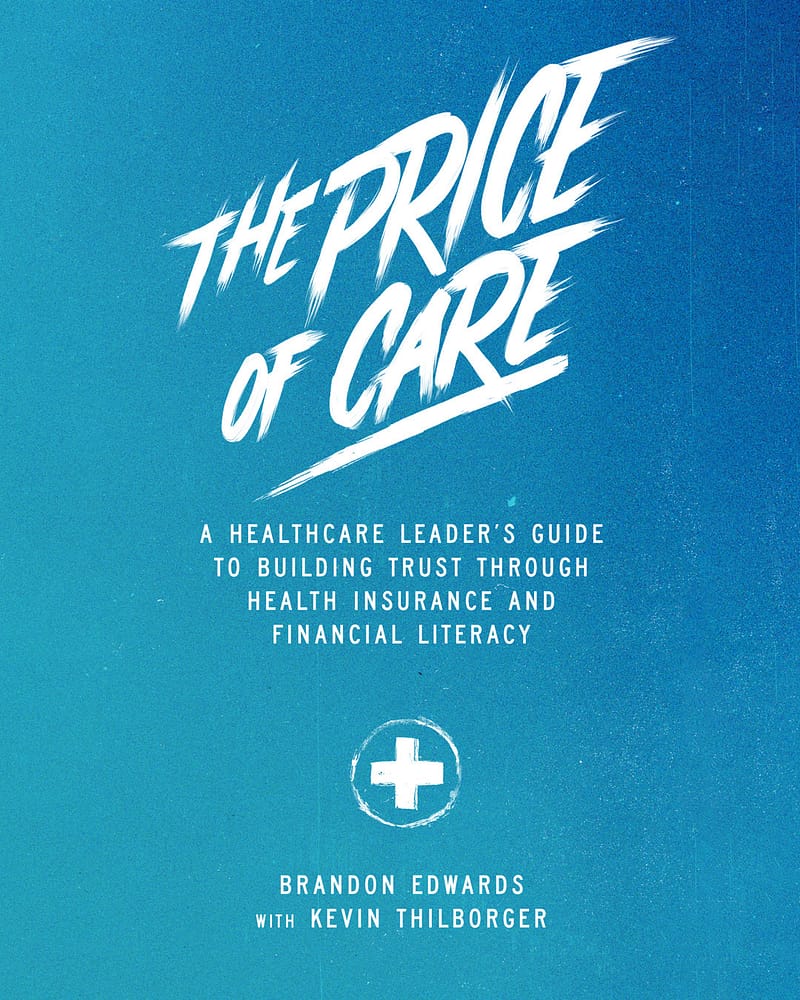
For the consumer, those are healthcare decisions. As Brandon Edwards and I argue in our book, whether to seek care is both a clinical and financial decision. When payors and politicians talk about benefit design, they are often disguising healthcare decisions as insurance decisions.
Every benefit design reflects a theory of health
If routine dental care is excluded, hearing aids are treated as optional, and routine vision care is carved out, the benefit structure is making an argument. It is saying oral health, hearing, and vision are separate enough from overall health to sit outside core medical coverage. Why?
The problem is that many of those assumptions reflect a view of the human body that science has largely moved beyond. Oral health influences nutrition, infection risk, and chronic disease management. Vision affects mobility, safety, social engagement, anxiety, depression, and independence. Hearing affects communication, cognition, and isolation. Social connection affects cardiovascular health, stroke risk, dementia, depression, anxiety, and mortality.
The body’s systems are interconnected, and they don’t recognize the categories insurance plans use.
Dental care is the easiest place to see the problem
Dental care may be the clearest example of what happens when benefit design lags behind clinical reality.
For many people, dental care still lives in a separate category from healthcare. Cleanings, fillings, crowns, dentures, and extractions are treated as somehow different from caring for the rest of the body. That may be administratively convenient, but it is biologically strange.
According to the National Association of Dental Plans, approximately 87% of Americans had some form of dental benefits in 2024, with employer-sponsored coverage accounting for the vast majority of that enrollment. Many people lose employer-sponsored dental coverage when they retire and transition into Medicare. A Health Affairs study found that after people became Medicare eligible, restorative dental visits decreased by 8.7 percentage points and complete tooth loss increased by 4.8 percentage points. The authors also note that half of older adults lack dental insurance and that 70% of dental spending by Medicare beneficiaries is paid out of pocket.
Poor oral health is not just a tooth problem. The National Institute of Dental and Craniofacial Research notes that oral health is connected to overall health, including diabetes, cardiovascular disease, respiratory infections, and pregnancy outcomes. Untreated oral disease can affect eating, nutrition, sleep, pain, and daily function. Dental infections can also progress into abscesses and, in severe cases, life-threatening infection.
The need for dental care does not disappear when employer-sponsored coverage disappears. It simply becomes more likely that the consequences show up later and somewhere else.
Vision and hearing tell the same story
Routine eye exams are about far more than updating a prescription. The American Academy of Ophthalmology says comprehensive eye exams help detect eye diseases early, and the CDC notes that eye care specialists play a key role in detecting and treating diabetes-related eye disease, including retinopathy, glaucoma, and cataracts.
This is not simply a matter of whether someone needs stronger glasses. Vision changes can affect whether people feel safe driving, walking, shopping, exercising, or navigating their homes. The National Institute on Aging notes that many older adults value the independence of driving, while age-related changes can make driving more difficult or unsafe.
Anyone who has had the “it may be time to take the keys” conversation with an aging parent or spouse knows that vision is not just a clinical issue. It is independence, mobility, dignity, and safety, all tangled together.
Hearing care has the same problem. For years, hearing loss was often treated as a quality-of-life issue. The research increasingly points somewhere else.
Hearing loss can make communication harder. Over time, communication challenges can lead people to withdraw from social settings, and that withdrawal can become loneliness and isolation. The ACHIEVE trial found that, among older adults at increased risk for cognitive decline, hearing intervention slowed loss of thinking and memory abilities by 48% over three years. Hearing aids are not a guaranteed dementia-prevention strategy, but the old assumption that hearing support is peripheral to health is getting harder to defend.
What begins as a sensory issue can become a mobility issue, a mental health issue, a cognitive health issue, and an independence issue. Benefit design often treats those as separate categories, but people do not experience them that way.
Social isolation is not just a social problem
The hearing and vision examples matter partly because they connect to one of the most underestimated health risks in the country, social isolation.
For years, loneliness was treated mostly as an emotional or social problem. The image that comes to mind is almost childlike, a kid standing alone on the edge of a playground while everyone else runs off to play. It is unfortunate and painful, but not necessarily dangerous.
Isolation is different. It usually arrives a little at a time, which may be one reason we underestimate it. A spouse dies or friends move away. Vision problems make driving less comfortable. Hearing changes make conversations harder. Invitations become less frequent, routines shrink, and social circles narrow.
What researchers are increasingly discovering is that this is not simply an emotional experience. It can have measurable consequences for physical and mental health. The CDC lists loneliness and social isolation as risk factors for heart disease, stroke, type 2 diabetes, depression, anxiety, dementia, self-harm, and earlier death. The U.S. Surgeon General’s advisory on social connection reports that poor social relationships, social isolation, and loneliness are associated with a 29% increased risk of heart disease and a 32% increased risk of stroke.
At some point, loneliness stops looking like a soft concern and starts looking like a healthcare risk factor.
It would be nice if every hearing aid, eye exam, and dental visit could be tied neatly to a prevented medical event. Unfortunately, healthcare rarely cooperates with the industry’s desperate affection for tidy models. Correlation is not causation, and we should say that plainly.
But we should also be honest about the pattern. If hearing loss contributes to isolation, and isolation is associated with cardiovascular risk, dementia risk, depression, and earlier death, hearing support is not simply about hearing better. If poor vision contributes to falls, anxiety, depression, and social withdrawal, vision care is not simply about clearer sight. If untreated oral disease affects nutrition, pain, infection risk, and chronic disease management, dental care is not simply about teeth.
These are not separate stories. They are part of a much larger chain of health and function, told through different benefit categories.
Insurance coverage and access to care are not the same thing
When routine care is excluded, limited, or made unaffordable, people become more likely to delay care, skip care, or seek care later when the problem is harder to treat and more expensive to address.
The patient may technically have insurance. They may even have a provider nearby. But if the care they need is carved out, capped, delayed, denied, or priced beyond reach, access does not really exist.
KFF polling found that 36% of adults said they skipped or postponed needed healthcare in the past 12 months because of cost. A Peterson-KFF analysis of National Health Interview Survey data found that in 2023, 21% of adults reported delaying or going without dental care because of cost, a higher share than those delaying medical care, prescription drugs, or mental healthcare.
That is the access to care problem hiding inside benefit design. Coverage categories determine behavior. Cost exposure determines behavior. Exclusions determine behavior.
People don’t make healthcare decisions in the abstract. They make them at kitchen tables and in parking lots after appointments. They make them while looking at their bank account, their insurance card, their deductible, and the part of the benefit booklet nobody should need a law degree to understand.
And when upstream care is missing, the downstream cost often lands somewhere else. It may show up as an emergency department visit for an infection that started in an abscessed tooth. It may show up as broken bones from a fall or as depression, isolation, avoidable complications, worsening chronic disease, or delayed treatment.
At some point, cost containment starts looking like cost relocation
We now understand far more about the connections between oral health, sensory health, cognitive health, cardiovascular health, mental health, mobility, nutrition, and social connection than we did when many traditional benefit structures were created. The science evolved, but benefit design didn’t keep up.
Payors are especially fond of positioning themselves as the responsible adults in the room, bravely protecting the healthcare system from runaway costs. Brokers take a similar position, advising their employer clients which benefits matter while charging unbelievably high fees to do so. The narrative is familiar. Providers are expensive, hospitals are consolidated, utilization must be managed, and someone has to keep spending under control. I have written before about how incomplete and convenient that story can be, particularly when payor behavior itself contributes to administrative burden, delayed care, and cost shifting across the system.
So here is the obvious question
If payors are so committed to reducing healthcare costs, why are so many benefit structures still built around avoiding upstream coverage and paying for downstream consequences? If the goal is truly to control healthcare costs, then we should be honest about cause and effect. And why aren’t brokers, with their terabytes of data, not arriving at a similar conclusion?
It is absurd to cover a surgery, hospitalization, and rehab costing tens of thousands of dollars because insurance did not cover an eye exam that costs a few hundred dollars and might have helped prevent a fall. This is a strange way to run a healthcare system and an even stranger way to claim fiscal discipline.
To be fair, the human body isn’t making it easy on anyone. It is not a car with independently operating systems. It is a complicated mess of interconnectedness that science continues to uncover. The connections were always there. We are simply getting better at recognizing them.
Benefit design should reflect what we now know about human health, not what we thought fifty years ago.
Coverage decisions must keep pace with what we’re learning — or payors will need to get better at explaining why their policies are so far behind the science.
I’ll leave you with three questions to consider.
- Which services are your patients delaying because of coverage limitations?
- Which payor policies are creating barriers to care in your market?
- Are you actively shaping those conversations, or simply reacting to them?