
Healthcare organizations have a long-standing discomfort with talking about money, and the reasons for that discomfort are not hard to understand. For many clinicians and leaders — especially in nonprofit hospitals — healthcare is a calling rather than a commercial transaction. Putting a price next to care can feel wrong, almost like putting a price tag on compassion. However, avoiding the topic does not make the financial reality of healthcare disappear.
Patients still worry about what care will cost. They still try to understand what their insurance actually covers, and they still make decisions about when, or whether, to seek treatment based on those concerns. If providers don’t address that reality directly, someone else will explain it for them. Increasingly, those explanations come from people who have never delivered a day of patient care.
If providers won’t explain healthcare costs, others will
Patients are trying to understand the financial side of healthcare in an environment where reliable information is surprisingly hard to find. When people cannot get clear answers from providers, they go looking elsewhere — coworkers, online forums, or social media influencers who promise to decode the system in sixty seconds. Some of that advice is helpful. Much of it is not. However, once the information gap exists, it rarely stays empty for long.
The larger risk is not just social media confusion. It is the broader narrative forming around healthcare costs. Across Washington and many state capitals, a growing ecosystem of policy groups, advocacy organizations, and think tanks has begun framing hospitals as the primary driver of rising healthcare spending. Reports are published, headlines follow, and the story gradually simplifies into something easy to repeat: hospitals are expensive, hospitals are consolidating, and hospitals are the reason healthcare costs keep rising.
The narrative about healthcare costs is already being written
None of this activity is accidental. Well-funded organizations are actively working to shape how policymakers and the public think about healthcare cost transparency, tax status, consolidation, and transparency. If you read enough coverage, the narrative begins to feel inevitable. However, inevitability is often just the result of repetition.
Anyone who has spent time inside a health system knows the financial reality is far more complicated. Hospitals care for large numbers of patients covered by Medicare, Managed Medicaid, Medicare Advantage, and self-pay categories while absorbing rising costs for labor, supplies, and modern clinical technology. Analysts often describe the situation as a structural mismatch between constrained payment rates and the real cost of delivering care.
Silence undermines patient trust in care decisions
There are understandable reasons hospitals hesitate to talk openly about cost with patients. Leaders worry the conversation will sound defensive. Clinicians worry that attaching numbers to care will make medicine feel transactional. However, silence creates its own problems.
When providers decline to explain the economics of care, patients begin to draw their own conclusions. If the people delivering care seem reluctant to talk about cost, it is not unreasonable for consumers to wonder whether there is something to hide. Where there is smoke, they assume, there must be fire.
That perception can take hold quickly. Patients rarely see the financial structure behind the scenes — thin operating margins, rising labor costs, and payment systems that rarely align with the actual cost of care. What they see instead are headlines about pricing and consolidation, which reinforces the suspicion that hospitals must be charging far more than the care is worth.
When hospitals stay silent others control the story
The danger of staying quiet about cost is not just patient confusion. It is the loss of narrative control.
When providers decline to explain how healthcare economics actually work, the public conversation moves forward without them. Advocacy organizations fill the gap, policy proposals begin to reflect the simplified narrative, and media coverage gradually reinforces the same assumptions. By the time providers attempt to re-enter the discussion, the storyline has already hardened.
Healthcare leaders often say they do not want to sound defensive when discussing cost. That instinct is understandable. However, refusing to engage the conversation does not remove the issue, it simply allows others to define it.
The conversation providers can’t afford to avoid
Healthcare costs will remain one of the most contested issues in public policy for years to come. Employers are worried about affordability, policymakers are debating new regulations, and advocacy groups are pushing for aggressive healthcare cost transparency measures. At the same time, patients are paying a larger share of healthcare expenses than ever before.
All of these forces guarantee that the financial side of healthcare will remain front and center. Providers can participate in that conversation with clarity and context, or they can remain silent and allow others to define it for them.
One approach builds understanding. The other builds headlines — and headlines have a way of becoming policy.
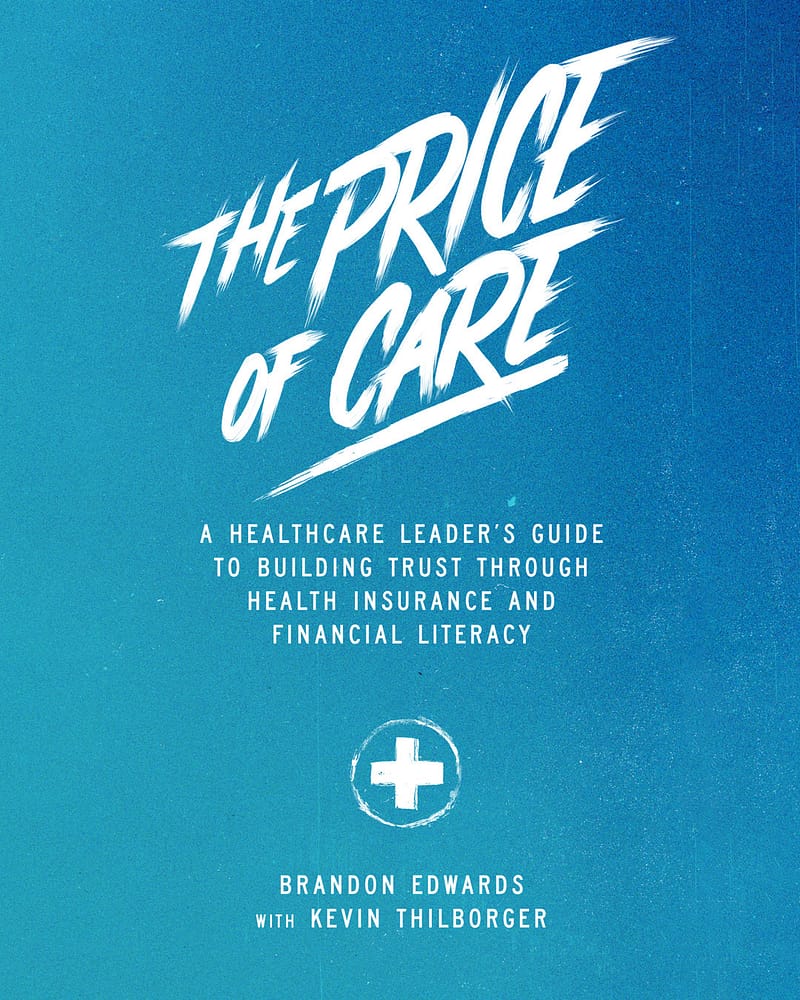
Read more about this important subject in a new book by Brandon Edwards and Kevin Thilborger, The Price of Care: A Healthcare Leader’s Guide to Building Trust Through Health Insurance and Financial Literacy.